

Enterprises Call for an End to “Double Taxation” in Mineral Extraction
Ha Noi, October 15, 2025 – The Vietnam Chamber of Commerce and Industry (VCCI) hosted a workshop titled “Financial Policies for the Mining Industry”, drawing nearly 100 participants from central ministries, research institutes, mining associations, consulting firms, and leading mining enterprises. The event provided a platform for dialogue on current financial policy challenges, with the aim of identifying practical solutions to unlock capital flows and promote the sustainable development of Vietnam’s mining sector.
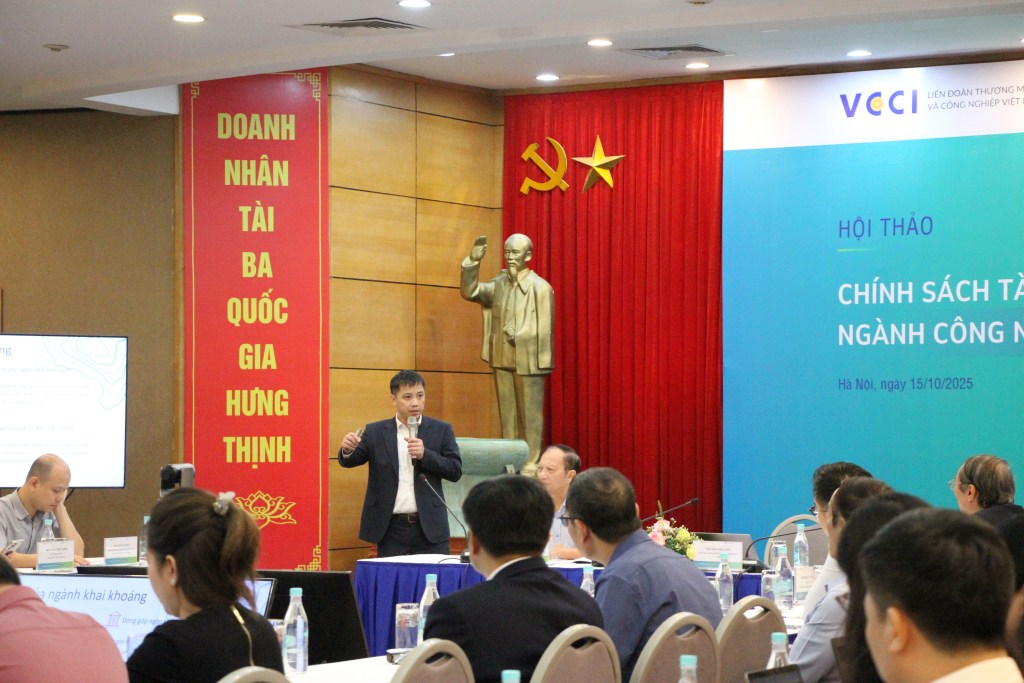
In his opening remarks, Mr. Dau Anh Tuan, Deputy Secretary General and Head of the Legal Department at VCCI, underscored that Vietnam’s mining industry is not only a major contributor to national GDP and state revenues, but also a cornerstone of critical sectors such as energy, advanced materials, defense, and high technology. In this context, financial policy is regarded as the “backbone” that directly impacts the competitiveness and sustainable development of the mining industry. However, according to Mr. Tuan, the significantly higher financial obligations compared to international standards pose risks, reducing both competitiveness and investment attractiveness.
Financial Bottlenecks
According to Deloitte, Vietnam ranks among the world’s top 10 nations in terms of mineral reserves: third in fluorite, fourth in tungsten, fifth in bauxite, and sixth in rare earth elements. Yet, the economic value derived from these abundant resources remains modest compared to their potential.
Mr. Bui Ngoc Tuan, Tax Partner of Deloitte Vietnam, noted: “Vietnam’s mining sector currently bears a combined tax and fee burden equivalent to around 25% of total revenue, far higher than the 5–10% average in countries such as Australia, the United States, or Malaysia. In particular, corporate income tax for tungsten and rare earth extraction can reach 50%, double the standard 20% rate”.
This situation, he emphasized, highlights the urgent need to review and refine financial policies to reduce barriers and encourage investment in deep processing and value-added production.
Mr. Phan Chien Thang, Deputy General Director of Nui Phao Mining Company, shared that mining enterprises are subject to more than 14 different taxes and fees, accounting for nearly 30% of total revenue. “There are multiple overlapping charges – for example, the resource tax and the mining rights fee – while other taxes such as export duty, VAT, and resource tax are inconsistent with the Government’s policy of promoting downstream processing,” he explained.

According to Mr. Thang, both the resource tax and the mining rights fee essentially target the same taxable base, extracted mineral resources, effectively subjecting enterprises to “double taxation on the same value of resources”.
Echoing this concern, Dr. Nguyen Tien Chinh of the Vietnam Mining Science and Technology Association proposed merging the resource tax and the mining rights fee into a single levy managed by the Ministry of Finance. He also recommended introducing conditional incentives, such as lower resource taxes for enterprises investing in deep processing or recovering associated minerals, to promote efficiency and sustainability in the industry.
Unlocking Resources – Enhancing Investment Appeal
Experts agreed that Vietnam’s attractiveness to global investors depends not only on its rich mineral potential but also on the stability, transparency, and predictability of its policy framework. Licensing procedures, taxation, and fees are among the key factors’ investors consider, as they directly affect risk assessment, technology investment, and long-term strategic planning.
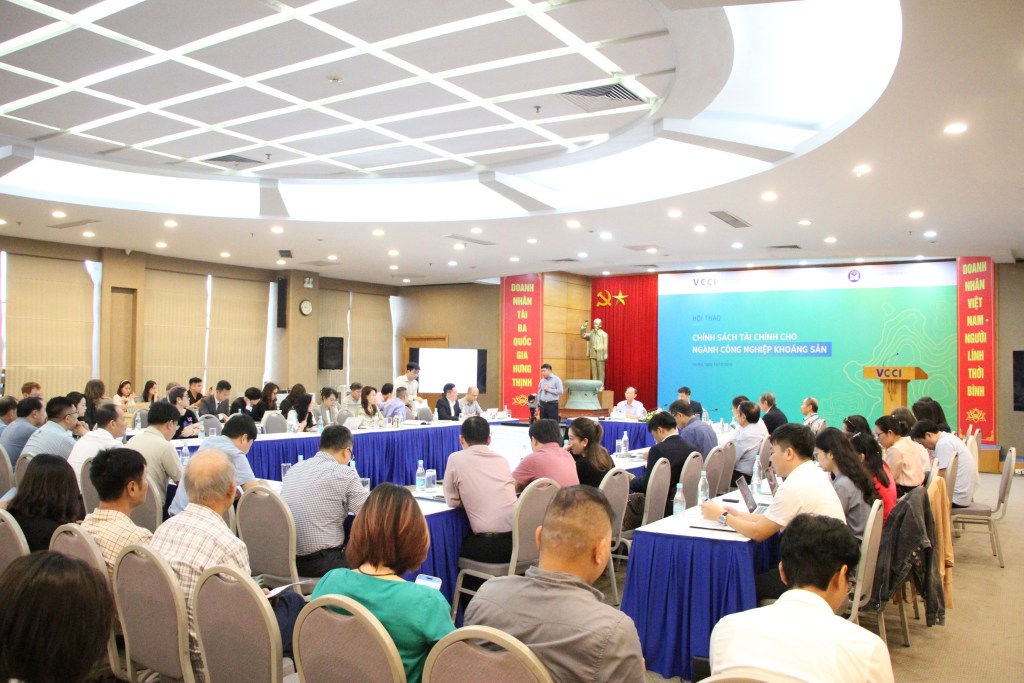
Sharing this view, Mr. Dau Anh Tuan – Deputy Secretary General and Head of the Legal Department at VCCI – emphasized the need to build a competitive and balanced fiscal policy framework that aligns the interests of the State, enterprises, and local communities. A well-calibrated financial policy will not only ‘nurture revenue sources for the State budget but also foster economic growth in harmony with environmental and social responsibility, ensuring long-term benefits for localities engaged in mining activities, he said.
Mr. Tuan added that VCCI will compile the workshop’s recommendations into a comprehensive policy proposal to be submitted to the Government and the National Assembly, serving as a foundation for revising the legal framework for the mining sector in the near future.
The participants also agreed that to achieve the objectives outlined in Resolution 68-NQ/TW and Resolution 10-NQ/TW, Vietnam must soon establish a unified, transparent, and stable fiscal policy system that secures state revenue while enabling enterprise growth.
Such reforms, they concluded, would pave the way for Vietnam’s mining industry to accelerate technological innovation, advance sustainability, and become a driving force for economic growth – enhancing the nation’s global competitiveness.